
Introduction: Why the Right Puffer Fit Delivers More Warmth, Comfort, and Style
Choosing the right size in women’s puffer jackets is about more than a label. A precisely dialed fit traps warm air efficiently, eliminates cold spots, and flatters your silhouette without bulk. When the quilting sits where it should, you feel lighter, warmer, and more polished.
In this guide, you’ll learn how to choose the right size in women’s puffer jackets through accurate measurements, brand fit decoding, smart layering strategy, and a luxe-minded try-on checklist. The result: exceptional comfort and a refined winter look.
Quick Summary: Measure accurately, read the brand’s fit notes, consider layers, and choose a silhouette (slim/regular/oversized) that matches your use-case
- Measure meticulously: Bust, waist, hips, shoulder width, and sleeve length using a flexible tape.
- Decode fit notes: Check each brand’s size chart, garment measurements, and cut description (slim, regular, oversized).
- Plan layers: For chunky hoodies or mid-layers, consider sizing up; for daily city wear, stay true-to-size.
- Match silhouette to use: Slim for sleek commuting, regular for versatility, oversized for fashion-forward layering.
How to Measure for a Puffer: Bust, waist, hips, shoulder width, sleeve length (plus how to use a flexible tape correctly)
Accurate measurements are the foundation of a perfect puffer fit. Wear a thin base layer and stand naturally—don’t inhale or tense.
- Bust: Wrap tape around the fullest part, parallel to the floor. Keep it snug, not tight.
- Waist: Measure at your natural waist (above the navel), relaxed and comfortable.
- Hips: Measure around the fullest point of your seat and hips.
- Shoulder width: From shoulder tip to shoulder tip, across the back.
- Sleeve length: From shoulder seam to wrist bone, elbow slightly bent.
Pro tip: Use a flexible tape, keep it level, and record in inches and centimeters. If between sizes, compare your numbers to garment measurements when available—these reveal room for layers and quilting loft.

Decoding Size Charts and Fit Types: Alpha vs numeric sizes, slim vs regular vs oversized cuts, and what they mean for layering
Size charts vary by brand, so always cross-check your measurements rather than relying on your “usual size.”
- Alpha sizes (XS–XL): Convenient, but ranges are broad. Verify garment chest, hem, and sleeve measurements if listed.
- Numeric sizes (0–16+): Often more precise. Note if the brand runs small or generous in reviews and fit notes.
- Slim fit: Tailored through the shoulders and torso. Best for light layers and a sharp, urban profile.
- Regular fit: Balanced ease and shape. Suits sweaters and light mid-layers without looking bulky.
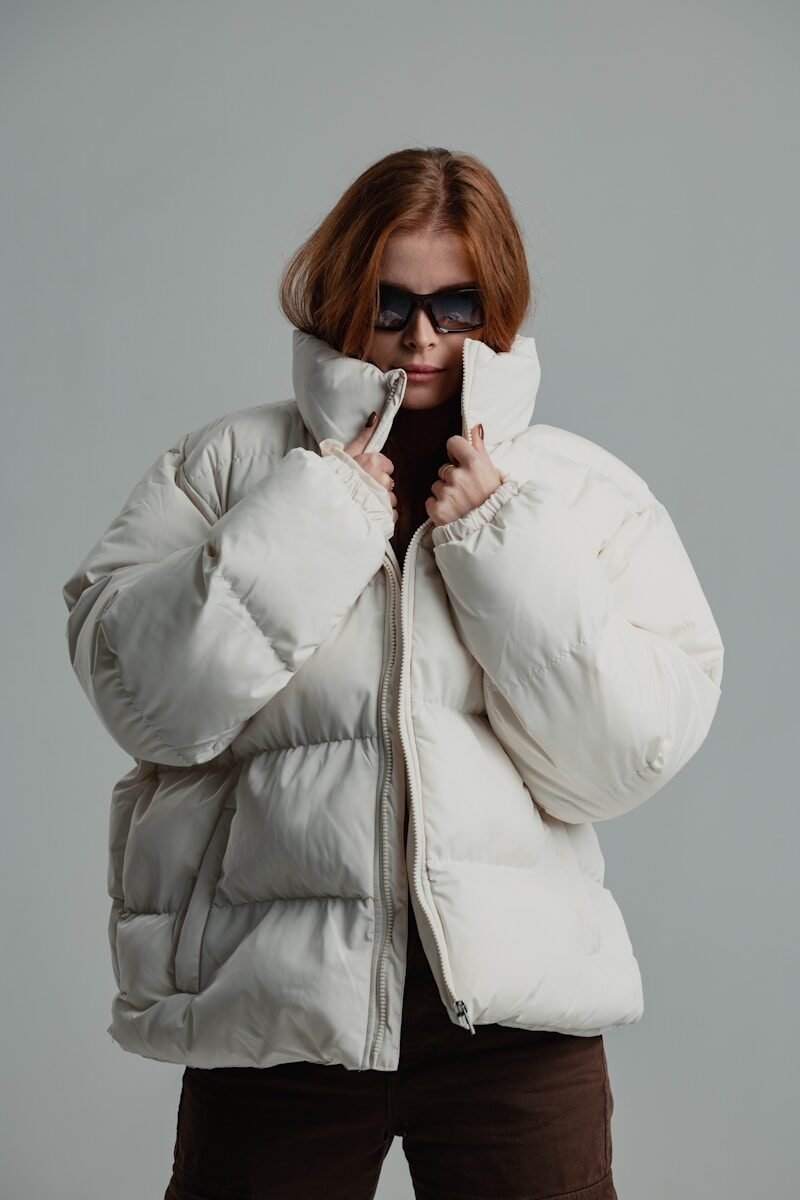
- Oversized: Intentionally voluminous. Excellent for statement looks and heavy layering; expect dropped shoulders and extra length.
Remember: quilting thickness can affect interior volume. A slim-cut, heavy-fill puffer may feel tighter than a regular-cut, lighter-fill style.
Layering Rules: When to size up for hoodies and mid-layers vs staying true-to-size for daily wear
- Daily city wear: If you mostly pair your puffer with tees or fine knits, stay true-to-size for a sleek line.
- Mid-layers (merino, light fleece): Choose true-to-size or a half-step up if you prefer extra mobility.
- Bulky hoodies/heavy fleece: Consider sizing up—especially with slim cuts or thick insulation.
- Active use: For walking or commuting, a close-yet-mobile fit prevents heat loss and snagging.
Fit test: Try your thickest expected mid-layer under the jacket. If zipping feels strained at the bust or shoulders, or sleeves twist when you move, size up.
Body-Specific Fit Tips: Petite, tall, plus-size, athletic shoulders, and curvy figures
- Petite: Look for shorter hems (hip or cropped) and proportioned sleeves. Avoid overwhelming quilting; slim or regular cuts elongate.
- Tall: Seek extended sleeve lengths and longer hems (below hip or mid-thigh) to maintain balance and coverage.
- Plus-size: Prioritize structured shoulders, two-way zippers, and defined side panels. Regular cuts with gentle waist shaping flatter and allow layers.
- Athletic shoulders: Check shoulder width and upper back measurements. Raglan sleeves or articulated shoulders enhance reach.
- Curvy (full bust/hips): Compare bust and hip garment measurements to your body. Consider A-line or two-way zips to prevent pulling at the hem.
For all body types, comfort and mobility are non-negotiable—good design follows your lines instead of fighting them.
Try-On Checklist: Range of motion, zipper comfort, hem and sleeve length, cold-spot check
- Range of motion: Raise arms, hug yourself, and reach forward. Seams shouldn’t bite; down shouldn’t compress flat.
- Zipper comfort: Zip fully. The collar should graze comfortably without digging into the chin. Two-way zips reduce hem pull when sitting.
- Hem length: For urban wear, hip to mid-thigh is versatile; for extra warmth, try knee-length. Ensure it doesn’t ride up.
- Sleeve length: Cuffs should meet or slightly cover the wrist bone. Internal cuffs should seal without squeezing.
- Cold-spot check: Sweep your hands across quilting. No obvious thin patches or tight zones at bust, shoulders, or elbows.
Common Sizing Mistakes to Avoid (and how to fix them)
- Guessing by your usual size: Brands vary. Always verify body and garment measurements.
- Ignoring shoulder fit: If shoulders are narrow, the whole jacket feels tight. Choose cuts with adequate shoulder width or raglan sleeves.
- Over-sizing for warmth: Too much ease lets heat escape. Balance room for layers with a close, efficient seal.
- Skipping layer tests: Try on with your bulkiest mid-layer to confirm zipper ease and mobility.
- Not checking returns: If you can’t exchange sizes easily, you’re less likely to perfect the fit.
Fix: Measure, compare, order two adjacent sizes if policies allow, and keep the one that nails comfort and silhouette.
Where to Buy Reliable Women’s Puffer Jackets Online: Trusted retailers and return policies
Shop retailers known for clear size charts, detailed fit notes, and easy returns. Look for free exchanges, printable labels, and try-at-home windows (at least 14–30 days).
- Transparent measurements: Garment dimensions and model stats help predict fit.
- Robust reviews: Size-up/size-down feedback from verified buyers is invaluable.
- Flexible returns: Two-way shipping labels and quick refunds make size experimentation painless.
Shopping for him too? Explore complimentary styles via Men’s Jackets to coordinate winter looks.
Affiliate Integration: Recommended Retailer – Shop Women’s Jackets at JacketsCasual (https://jacketscasual.com/product-category/womens-jackets/)
For a curated selection and streamlined sizing experience, explore Women’s Jackets at JacketsCasual. You’ll find refined silhouettes, clear product details, and customer reviews that make comparing fits effortless. Use this guide, confirm measurements, and lean on their return policy for a no-stress size dial-in.
Conclusion: Choose with confidence—measure, compare, and test movement (plus easy returns if you shopped our recommended retailer)
Now you know how to choose the right size in women’s puffer jackets: measure precisely, decode each brand’s chart and cut, plan for your layers, and complete the try-on checklist. The payoff is superior warmth, fluid movement, and a silhouette that feels unmistakably elevated.
Still between sizes? Order adjacent options and rely on friendly returns—especially when shopping via Women’s Jackets at JacketsCasual—to secure the perfect fit.
FAQ: Should I size up for winter layers? How should sleeves fit on a puffer? Do oversized puffers look bulky? What’s the best length for short/tall frames? How do I know if a puffer is too tight?
- Should I size up for winter layers? If you’ll wear hoodies or heavy fleece often, consider sizing up—especially with slim cuts. For light knits, stay true-to-size.
- How should sleeves fit on a puffer? Cuffs should meet or slightly cover the wrist bone. Internal cuffs should seal gently; you should bend your elbow without tugging.
- Do oversized puffers look bulky? They can if proportion is off. Balance with streamlined pants and ensure the shoulders and sleeves still align correctly.
- Best length for short/tall frames? Petites: hip or cropped for elongation. Tall: below-hip or mid-thigh maintains balance and warmth.
- How do I know if a puffer is too tight? If zipping strains at the bust, shoulders pinch when you reach, or quilting flattens across the chest, go up a size or choose a roomier cut.