Introduction: Fast, Safe, and Proven Stain Removal for Faux Leather
Your faux leather jacket deserves the same refined care you bring to every part of your wardrobe. If you are wondering how to remove stains from a faux leather jacket without dulling the finish or causing peeling, you are in the right place. The approach below blends speed with restraint: act quickly, treat gently, and always protect the polyurethane (PU) coating that gives faux leather its supple, polished look.
Unlike natural leather, most vegan or PU leather jackets have a delicate topcoat. The goal is selective, short-contact cleaning—no soaking, no abrasive scrubbing, and no harsh solvents. With the right moves, common intruders like ink, oil, sunscreen, coffee, or salt rings lift cleanly, leaving your jacket photo-ready once again.
For styling and care inspiration across seasons, explore Jackets Casual and browse their latest looks and maintenance notes. You can also keep an eye on new care stories via their feed at jacketscasual.com.
Quick Summary: Stain First-Aid Checklist (Blot, Test, Treat, Rinse-Wipe, Dry)
- Blot: Lift fresh spills immediately with a white, lint-free cloth. Do not rub.
- Test: Spot-test cleaners inside a hem or seam for colorfastness and finish safety.
- Treat: Apply only the minimal amount of the recommended cleaner for the stain type below.
- Rinse-Wipe: Follow with a clean cloth lightly dampened with cool water to neutralize residue.
- Dry: Air-dry in shade. No heat, no sun. Shape the jacket and let it rest.
These five steps are your fast track to a safe result—precise, controlled, and finish-friendly.
Identify the Stain Type: Oil/Grease, Ink/Dye Transfer, Makeup/Sunscreen, Tannin (Coffee/Tea/Wine), Salt/Sweat, Mildew
Correct diagnosis saves time and preserves the jacket’s luxurious sheen. Pin down the culprit before you reach for a cleaner.
- Oil/Grease: Darkened patch, slick feel (food splatter, body oil, hair product).
- Ink/Dye Transfer: Sharp lines or smudges from pens, dark denim, or printed totes.
- Makeup/Sunscreen: Creamy, tinted, or SPF-white cast; may feel waxy or lotion-like.
- Tannin (Coffee/Tea/Wine): Brown, amber, or red-violet stain; often from splashes or drips.
- Salt/Sweat Rings: White, chalky halo or ring—often from winter commutes or workouts.
- Mildew: Musty odor with scattered, grey-green specks after damp storage.
Once you identify the stain family, apply the matching method below, keeping contact times brief and pressure minimal.
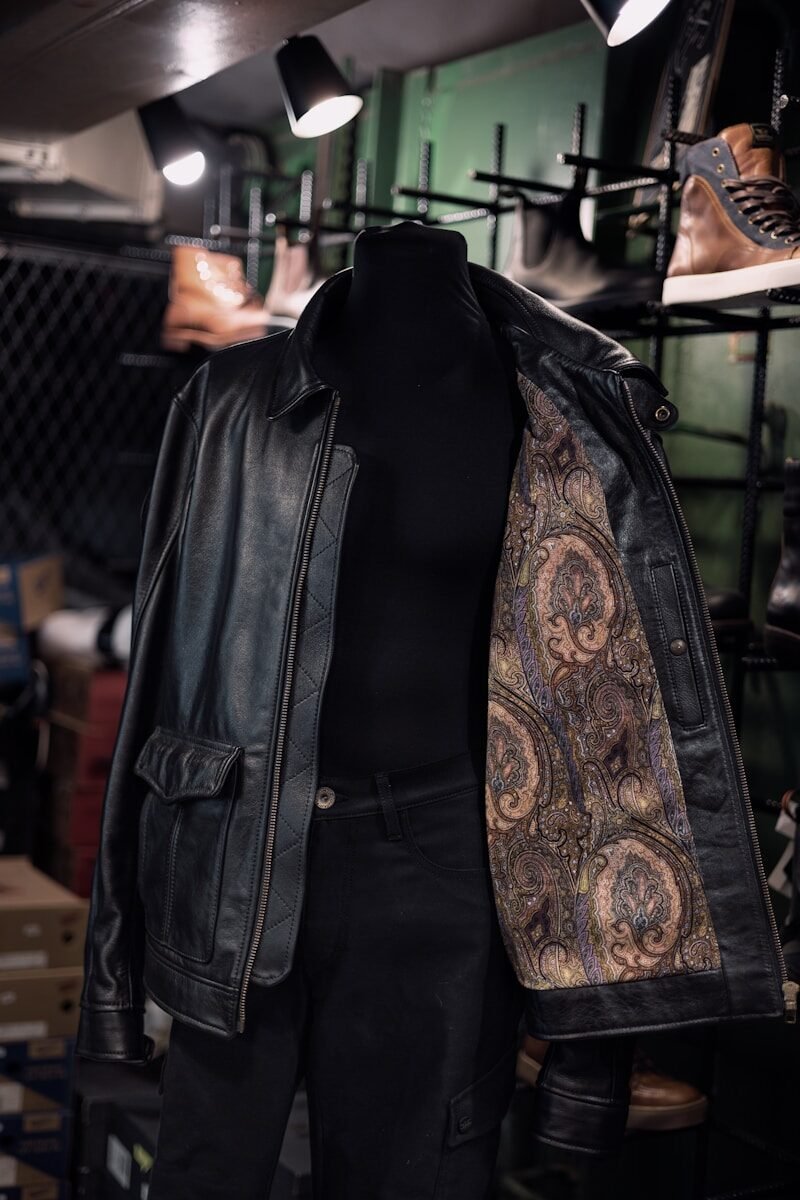
Universal Rules: Blot—Don’t Rub, Use White Cloths, Small Areas, Short Contact Times
Elegant garments age beautifully when cared for with restraint. These universal principles protect PU and vegan leather finishes while efficiently lifting stains.
- Blot—don’t rub: Rubbing can burnish, haze, or delaminate the topcoat. Use gentle, vertical pressure.
- Choose white tools: Use white microfiber cloths, cotton swabs, and soft sponges to avoid dye transfer.
- Work small: Treat a spot no larger than a coin at a time for control and to prevent tide marks.
- Short contact times: Apply, count a few seconds, then rinse-wipe. Repeat if needed rather than soaking.
- Cool water only: Heat can warp the finish or set certain stains.
- Avoid strong solvents: Bleach, acetone, lacquer thinner, and high-proof alcohols can dissolve PU.
When in doubt, slow down. One clean pass with a safe method is better than three aggressive ones.
Ink & Dye Transfer: 70% Isopropyl Alcohol on a Cotton Swab, Light Dabs, Immediate Rinse-Wipe
Ink is bold but beatable when approached with precision. The secret is to minimize spread and protect the topcoat.
- What you need: 70% isopropyl alcohol, cotton swabs, white microfiber cloth, cool water.
- Spot-test: Inside a hem. If the finish hazes or color transfers, stop and seek a pro.
- Dab, don’t drag: Lightly touch the ink with an alcohol-dampened swab. Rotate to a clean side with each dab.
- Micro-movements: Work from the stain’s edge inward to prevent halos.
- Immediate rinse-wipe: Follow each brief application with a cloth lightly dampened in cool water.
- Repeat if needed: Several light passes outperform one saturated attempt.
For dye transfer from denim or bags, the same protocol applies, but be even gentler—those pigments can sit shallow on the finish. If any clouding or stickiness appears, pause immediately.
For seasonal care and styling inspiration that pairs beautifully with a pristine jacket, browse the latest at Jackets Casual.
Oil & Grease: Cornstarch/Baking Soda Absorb, Then Mild Dish Soap Solution
Oil responds best to absorption followed by a delicate cleanse. Avoid water-first—pushing oil around creates halos.
- Absorb: Dust cornstarch or baking soda over the fresh oil patch. Let it sit 15–30 minutes to wick the oil.
- Lift: Gently tap or brush the powder away with a clean, dry cloth.
- Prepare solution: Mix a few drops of mild, dye-free dish soap in cool water to create a light suds.
- Blot-clean: Lightly dampen a cloth in the solution and blot the area. Keep passes short.
- Rinse-wipe: Follow with a cloth dampened in plain cool water to remove soap residue.
- Air-dry: In shade, jacket on a wide hanger to maintain structure.
For older, set-in grease, repeat the absorb step. Patience prevents over-wetting and maintains a uniform, luxe finish.
Makeup & Sunscreen: Mild Soap Solution or Micellar Water (Spot-Test), Gentle Lift
Complexion products cling to surfaces by design. Choose a cleanser that breaks oils without stripping the PU coating.
- Option A: Mild soap: Mix a few drops of gentle, fragrance-free dish soap in cool water.
- Option B: Micellar water: Spot-test first; choose alcohol-free, dye-free formulas.
- Application: Lightly dampen a cotton pad and lift the makeup with short, upward blots.
- Rinse-wipe: Neutralize residue with a clean cloth dampened in cool water.
- Dry: Air-dry away from heat or sun.
Waterproof mascara or long-wear lipstick may need two or three light passes. Avoid vigorous strokes—luxury finishes reward a delicate hand.
Coffee, Tea & Wine: Cool Water + Mild Soap, Club Soda Assist, Quick Rinse-Wipe
Tannins respond to swift dilution and lift. Keep the process crisp and controlled to avoid tide lines.
- Blot fresh: Catch the spill at once with a white cloth—no rubbing.
- Soap assist: Use a lightly soapy cool-water cloth to dab the stain, then immediately rinse-wipe.
- Club soda: For stubborn marks, dab with flat club soda, then follow with a plain water wipe.
- Short sessions: A few quick cycles beat a prolonged soak every time.
Red wine responds well to repeated, brief dabs. Keep the fabric under-control and prevent overspread by working in small, outlined sections.
Salt & Sweat Rings: Diluted White Vinegar (1:3 Water), Feathered Blot to Avoid Rings
Winter commutes and warm evenings can leave mineral rings. The key is gentle acidity and feathered edges.
- Mix: 1 part distilled white vinegar to 3 parts cool water.
- Feathered application: Lightly blot from the outer edge inward to avoid creating a new tide line.
- Rinse-wipe: Follow quickly with a cool-water cloth to neutralize.
- Dry: Air-dry in shade. Shape panels and collar while drying for a sleek drape.
If a faint ring persists, repeat after full drying. Avoid saturating seams or edges.
Mildew Spots & Odor: Vinegar Wipe, Airing in Shade, Avoid Bleach or Strong Solvents
Mildew thrives in darkness and damp. Beat it with circulation, gentle acidity, and patience—never with bleach.
- Dry first: Hang the jacket in a breezy, shaded area to reduce active moisture.
- Vinegar wipe: Use the 1:3 white vinegar to water mix to lightly wipe speckled areas. Keep contact brief.
- Rinse-wipe: Follow immediately with cool water to remove acidity.
- Air out: Continue airing until the musty note dissipates fully.
Avoid bleach, ammonia, and aggressive mold removers—they can etch or delaminate the PU surface, compromising that luxe, satin-smooth finish.
When to Stop: Signs of Finish Lift or Color Transfer—De-escalate or Seek a Pro
Knowing when to pause protects your investment. If the jacket tells you to slow down, listen.
- Finish lifting: Surface turns tacky, cloudy, or slightly rough under your fingertip.
- Color transfer: Pigment appears on your cloth during very gentle passes.
- Persistent rings: Tide lines worsen despite careful feathering and short contact times.
When these occur, stop. Blot with plain water, air-dry, and consult a professional cleaner experienced with PU and vegan leathers. It’s better to preserve the finish than chase a final 5% at home.
Post-Treatment Care: Neutral Rinse-Wipe, Air-Dry, Optional PU-Safe Protectant
After spot work, rituals matter. They restore balance and keep the jacket’s texture even and refined.
- Neutralize: Always finish with a cool water rinse-wipe to remove residual cleaners.
- Dry in shade: No radiators, no sun. Heat can warp panels and invite micro-cracks over time.
- Shape: Hang on a broad, contoured hanger to maintain shoulders and drape.
- Optional protection: Apply a PU-safe protectant or conditioner designed for synthetic leather, following the label precisely.
- Store smart: Give it breathing room. Avoid overpacked closets and plastic garment bags.
Well-finished steps preserve the jacket’s lustrous, gallery-worthy surface so it’s always ready for a refined exit.
Conclusion: Act Fast, Be Gentle, and Protect the Finish
Mastering how to remove stains from a faux leather jacket is about decisive calm. Blot first, test smart, treat precisely, and neutralize. Within minutes, most intrusions lift cleanly without disturbing the elegant PU coating.
Build your own caring ritual and enjoy the quiet confidence of a jacket that always photographs beautifully. For styling ideas that match your newly pristine piece, explore the latest collections and guides at Jackets Casual.
FAQ: Will rubbing alcohol ruin faux leather? How do I remove pen marks? Can I use nail polish remover? What if a ring forms? How do I prevent future stains?
Will rubbing alcohol ruin faux leather?
Used correctly, 70% isopropyl alcohol can lift ink and dye transfer on many PU finishes. The keys: spot-test first, dab lightly with a cotton swab, and immediately rinse-wipe with cool water to neutralize. Avoid high-proof alcohols and never saturate seams.
How do I remove pen marks?
Touch the mark with a 70% isopropyl-dampened swab using tiny dabs, rotating the swab tip frequently. Work from the outside in and follow each pass with a water-damp cloth. Several gentle cycles are safer than one aggressive wipe.
Can I use nail polish remover (acetone)?
No. Acetone and acetates can dissolve the PU topcoat, causing haze, stickiness, or peeling. Stick to the stain-specific methods above, and if in doubt, consult a professional cleaner familiar with synthetic leathers.
What if a ring forms after cleaning?
Allow the area to fully dry. Then lightly feather the edges with a damp cloth (cool water), working the perimeter inward with short blots. If needed, a very mild soap solution can help blend the tidemark, followed by a rinse-wipe and air-dry in shade.
How do I prevent future stains?
Prevention is the quiet luxury move. Keep a white microfiber cloth in your bag for instant blots, avoid resting sleeves on newsprint or raw denim, rotate outerwear to reduce body oil build-up, and consider a PU-safe protectant. Store the jacket in a cool, shaded space with air circulation. For ongoing inspiration, check the latest posts at Jackets Casual.