Introduction: Home-Friendly Ways to Clean a Faux Leather Jacket Without Damaging It
Your faux leather jacket deserves the same reverence as any premium wardrobe piece. The good news: you can refresh it at home—safely—without sacrificing texture, shape, or sheen. This guide shares a refined, fabric-first approach to gentle care so your jacket remains sleek, polished, and ready for any occasion.
We’ll show you how to clean a faux leather jacket at home with a simple, luxury-level routine: precise prep, a pH-conscious wipe-down, and careful drying that respects the material’s structure. From PU to PVC to microfiber, each composition benefits from slightly different handling. By following these steps, you avoid cracks, peeling, and cloudiness, and you preserve the jacket’s elevated finish.
Prefer to browse additional jacket insights? Explore care and style inspirations at Jackets Casual—a helpful resource for people who treat their outerwear as an investment.
Quick Summary: Supplies and a Safe 5-Step Cleaning Method
Keep your process minimal yet meticulous. Here’s a fast-access checklist of what you need and the exact sequence to follow for a safe, home-cleaned finish.
- Supplies: Microfiber cloths (3–4), a small bowl of lukewarm water, a pH-neutral mild soap (a drop or two of gentle dish soap), a soft-bristle brush (optional), dry towel, and a sturdy padded hanger.
- Optional: Water-based faux-leather protectant spray, compressed air for dust in seams, cotton swabs for tight edges.
- Step 1 – Dust-off: Use a dry microfiber cloth to remove loose dust and surface debris.
- Step 2 – Soap solution wipe: Mix lukewarm water with a tiny drop of mild soap. Lightly dampen a cloth and wipe panels in smooth, even strokes.
- Step 3 – Rinse-wipe: With a fresh damp cloth (water only), remove soap residue for a clean, streak-free finish.
- Step 4 – Dry: Blot with a towel, then hang to air-dry away from heat and direct sun.
- Step 5 – Buff: Once dry, buff lightly with a clean microfiber for a refined, uniform luster.
This five-step method protects the coating, resists peeling, and maintains that crisp, couture silhouette.
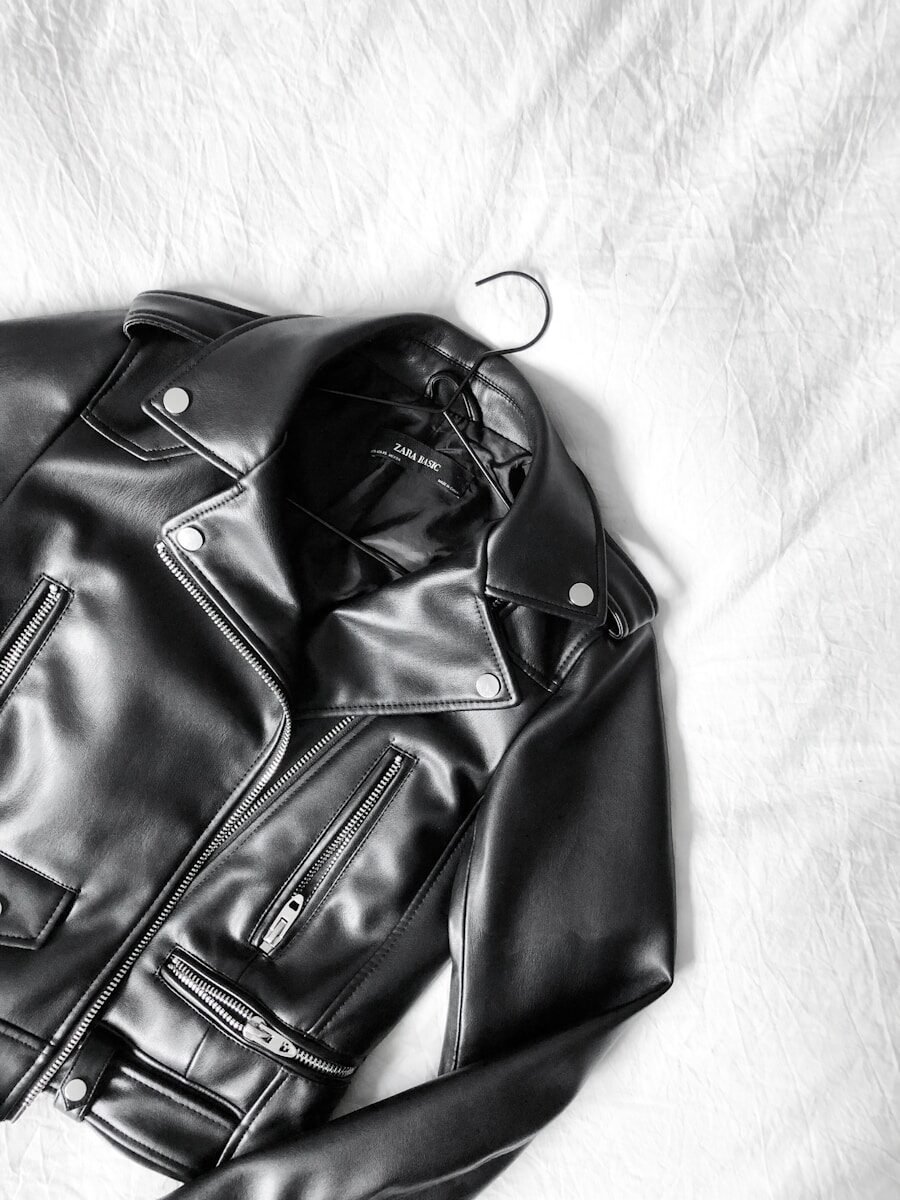
Know Your Material: PU vs. PVC vs. Microfiber (Why It Matters for Cleaning)
Not all faux leather is crafted equally. Understanding your jacket’s composition ensures you choose the most compatible cleaning touch and avoid premature wear.
- PU (Polyurethane) faux leather: Soft, flexible, and widely used in fashion. PU coatings can be sensitive to harsh solvents and heat. Use very mild soap, minimal moisture, and a gentle hand.
- PVC (Polyvinyl Chloride) faux leather: Slightly firmer, often shinier. PVC tolerates moisture better than PU, but strong chemicals still risk clouding or brittleness. Wipe conservatively.
- Microfiber (vegan leather blends): Advanced synthetics with a premium, buttery hand-feel. These often benefit from ultra-light damp cleaning and careful drying to maintain drape and structure.
Finish matters too. Matte surfaces show streaks if over-wet; glossy coatings can haze with aggressive soaps. When in doubt, keep water exposure low and escalate slowly after a spot-test.
Prep and Spot-Test: Where to Test, Colorfastness, and Seam-Safe Areas
Before touching the visible panels, invest one minute in a discreet spot-test. This protects the jacket’s finish and your peace of mind.
- Choose a hidden area: Inside hem allowance, the underside of a cuff, behind a pocket flap, or under the collar stand.
- Colorfastness check: Dampen a white cloth with the soap solution and press gently. If color transfers to the cloth or the surface dulls immediately, stop and dilute further.
- Seam-safe zones: Keep heavy moisture away from stitching and edge paint. Capillary action can draw water into layers, risking puckering or adhesive breakdown.
- Timing: Allow the test area to fully dry (10–15 minutes). Reassess sheen and texture under natural light before proceeding.
Successful spot-testing is your green light to a confident, flawless clean.
Step-by-Step Cleaning: Dust-Off, Soap Solution Wipe, Rinse-Wipe, Dry, Buff
Execute the process with calm, measured movements. The objective is a quiet refresh—not a soak.
- 1) Dry dust-off: Use a clean microfiber cloth to remove lint and dust. Work from shoulders down to hem. Use compressed air for zipper tracks and seam ridges if needed.
- 2) Soap solution wipe: Mix 1 small drop of mild, pH-neutral soap into a bowl of lukewarm water. Dampen (don’t drench) a cloth. Wipe in long, straight passes. Avoid circular scrubbing, which can leave halos on matte finishes.
- 3) Rinse-wipe: With a second cloth dampened in clean water only, repeat the same panel sequence to lift soap residue. This preserves clarity and feel.
- 4) Dry: Gently blot with a towel to remove surface moisture. Transfer the jacket to a padded hanger. Let it air-dry in a room with good circulation, away from radiators and sun.
- 5) Buff: Once fully dry, lightly buff with a fresh microfiber. This evens the finish, restoring a polished, boutique-level look.
For isolated smudges, touch a corner of the cloth to the solution, squeeze until nearly dry, and target only the mark. Minimal moisture, maximum control.

Target High-Grime Zones: Collars, Cuffs, Hems, and Zipper Plackets
High-contact areas collect body oils, cosmetics, and city grit—treat them with deliberate care.
- Collar and neckband: Work from the center back outward in small, straight strokes. If makeup marks persist, use a barely damp cloth and a touch more soap. Rinse-wipe immediately afterward.
- Cuffs and sleeve hems: Open zips or snaps to expose folds. Use cotton swabs to trace along seams and edges, then rinse-wipe to prevent residue lines.
- Zipper plackets: Clean the fabric tape and the coated edges sparingly to avoid wicking moisture into the interior. Finish by running a dry cloth along the teeth to remove stray dampness.
- Hemline: Road splash and smog settle here. Support the hem from behind with your other hand to keep the panel taut as you wipe. This prevents wrinkle-set.
Attending to these zones regularly prevents buildup that can dull the finish or cause premature wear.
Drying and Reshaping: Hang to Air-Dry, Avoid Heat, Maintain Drape
Drying is where luxury outcomes are won or lost. Heat can distort coatings and encourage cracks. Air is your ally.
- Use a proper hanger: A wide, padded hanger supports the shoulders, preserving line and drape.
- Avoid heat sources: No hairdryers, radiators, or direct sunlight. Allow the jacket to dry naturally in a well-ventilated space.
- Reshape while damp: Smooth lapels, roll the collar softly into its natural curve, and align sleeves so creases don’t set. If the hem curls, gently palm-press it flat.
- Timing: Most faux leather dries in a few hours. Do a final touch-check at seams and underarms before wearing or storing.
This patient approach keeps the silhouette crisp and editor-ready.
Finish Care: Matte vs. Glossy Faux Leather and When to Use a Protectant
Finishes define attitude—and require subtlety in care. Enhance what you have; don’t force shine or flatten texture.
- Matte surfaces: Prone to streaks if over-wet. Keep passes light and linear. After drying, a gentle microfiber buff restores a velvet-like clarity without gloss.
- Glossy finishes: Susceptible to hazing with strong soaps. Favor ultra-dilute solution and soft buffing. If micro-swirls appear, reduce pressure and use a plusher cloth.
- Protectants: Consider an occasional water-based, PU-safe protectant designed for synthetics. Apply sparingly after cleaning and drying. Always spot-test first to avoid tackiness or residue.
- Avoid leather conditioners for real hide: Traditional oils and waxes can interfere with faux coatings, inviting cloudiness or softened edge-paint.
The goal: a finish that looks inherent—never over-processed.
What Not to Use: Bleach, Acetone, Pure Alcohol Wipes, Abrasives, Heat
Preservation demands restraint. These common shortcuts lead to costly damage.
- Bleach or chlorine-based cleaners: They degrade coatings, causing discoloration, stiffness, and cracking.
- Acetone and strong solvents: Strip finish, melt edge-paint, and leave irreversible texture changes.
- Pure alcohol wipes: High concentrations can pull dyes, dull shine, and embrittle PU. If absolutely necessary for ink, test a very diluted solution in a hidden spot and neutralize immediately.
- Abrasive pads or powders: Create micro-scratches that catch light and dirt, aging the jacket prematurely.
- Heat (irons, dryers, radiators): Warps the surface, encourages peeling, and can fuse layers together.
When in doubt, stay gentle. Your jacket’s couture-level look depends on it.
Ongoing Care: Weekly Wipe-Downs, Storage Tips, and Odor Prevention
Consistency keeps faux leather effortlessly immaculate. Think small rituals, big payoffs.
- Weekly wipe-down: Use a dry microfiber cloth to remove dust and oils after wear. Target collar, cuffs, and plackets first.
- Storage strategy: Hang on a wide, padded hanger. Allow space between pieces so surfaces don’t rub. Avoid cramped closets.
- Breathable protection: Opt for a cotton or mesh garment bag instead of plastic to prevent trapped humidity.
- Odor control: Place a small open box of baking soda or a sachet of activated charcoal on the closet shelf. For the lining, a quick air-out on a balcony (shade only) works wonders.
- Wrinkle prevention: Don’t overfold. If you must pack, roll loosely around soft layers and unpack promptly.
For seasonal style and care ideas, explore the latest features at Jackets Casual. Smart storage and gentle weekly maintenance extend the life and look of your favorite piece.
Conclusion: Keep Your Jacket Looking New—A Simple Routine Wins
Luxury is in the details, and a precise home routine delivers runway-ready results. With a pH-smart wipe-down, careful drying, and a light buff, your faux leather jacket maintains its crisp character and modern edge.
Build the habit: quick weekly care, prompt attention to high-grime zones, and zero tolerance for harsh chemicals. The payoff is a jacket that looks newly acquired, season after season—no studio services required.
FAQ: Can I use baby wipes? How often should I clean it? Can I iron faux leather? What if it starts peeling? How do I remove wrinkles safely?
- Can I use baby wipes? Many contain oils, fragrances, or alcohol that can haze or soften coatings. If you must, choose fragrance-free, alcohol-free wipes, spot-test first, and rinse-wipe with water afterward. A mild soap solution and microfiber cloth is safer and more consistent.
- How often should I clean it? Perform a weekly dry wipe-down for maintenance. Do a light soap-and-rinse wipe every 4–6 wears, or sooner if you notice visible marks on collars or cuffs.
- Can I iron faux leather? Avoid direct ironing—it can imprint texture or melt coatings. For wrinkles, use a handheld steamer on the lowest setting, steaming from inside the garment and never lingering. Alternatively, hang in a steamy bathroom (away from water) for 10 minutes, then smooth by hand.
- What if it starts peeling? Peeling indicates coating failure. You can trim loose flakes and use a clear PU repair adhesive on tiny spots, but widespread peeling typically isn’t reversible. Focus on prevention: gentle cleaning, no heat, no harsh solvents, and proper storage.
- How do I remove wrinkles safely? Hang on a padded hanger, allow gravity to assist, and use light steam from the inside only. Smooth panels with your palms as they relax. Avoid pressing tools directly on the surface.
Still deciding how to clean a faux leather jacket at home for a special event? Give yourself a day to clean, air-dry, and buff so the finish settles into its sharpest form.